
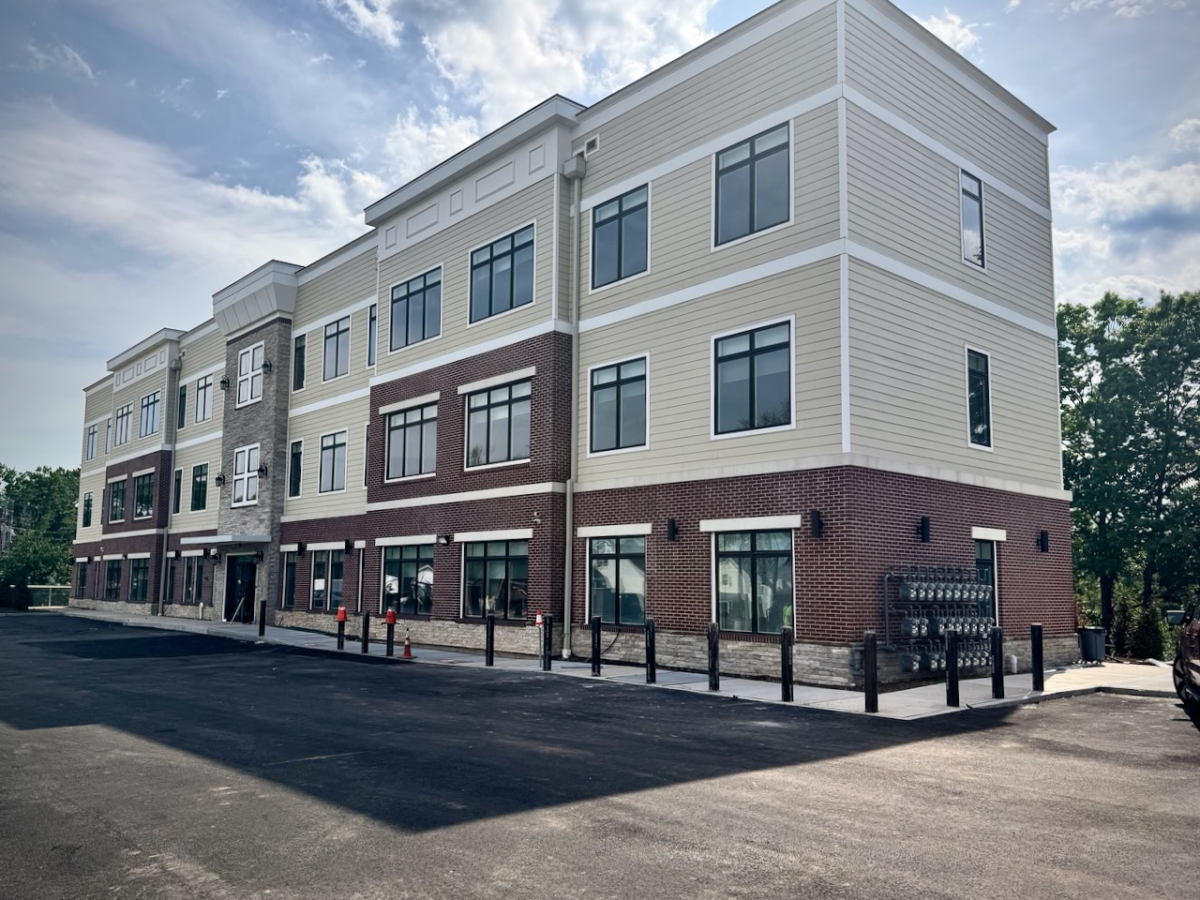
A vacant apartment building along Route 440 in Hopelawn is being converted into supportive housing for residents with disabilities and high medical needs. A closing is expected in July.
A Big Year for NJ Schools as Central Jersey Districts Prepare for New Phone Rules
Superintendents across the region describe different timelines, tactics, and costs as the state's new device restrictions take effect this school year.

iPhone, iPhone Plus, iPhone Pro, iPhone Pro Max. (Credit: Ka Kit Pang)
Editor’s note: The Central Jerseyan is free to read and supported by advertising. If you value this kind of local reporting and want to help sustain it, you can become a citizen supporter on Patreon. Your contribution helps fund continued coverage of local government, schools, and community issues.
Chris Howell | August 31, 2026
This is a big year for New Jersey schools. The state’s bell-to-bell ban on personal electronic devices goes into effect at the start of the school year. The Central Jerseyan spoke with superintendents across the region to learn how districts are preparing for the big change.
Phones and other personal gadgets have to stay off and put away for the entire school day, from the first bell in the morning to the last bell in the afternoon. That includes lunch, and it includes the few minutes kids spend moving between classes, times when phones were often still allowed even at schools that already restricted them during class. And it’s not just phones. Smartwatches, smart glasses, and personal laptops also fall under the new rule.
Gov. Phil Murphy signed the law in early January, and the state’s Department of Education has kept sending out updated guidance since then, most recently in July, just weeks before schools opened their doors. Every district has had to write its own local version of the rule and get it approved by its school board. That means the law looks the same on paper everywhere, but the experience of getting there has looked different from district to district.
Central Jerseyan reached out to more than a dozen superintendents across Middlesex, Union, Somerset, Monmouth, and Mercer counties to learn what that process looked like from the inside.
DON’T LET AN ALGORITHM DECIDE YOUR NEWS
Sign up for The Central Jerseyan Newsletter for independent local news and events every week.
For a handful of districts, this law formalized something already underway.
Rahway’s school board first adopted a policy restricting student cell phone use in July 2025, about five months before the state law was signed. This year, the board updated that policy on its normal schedule, with a first reading in late July and a second, final reading in late August. It did not need to rush or bend its own rules to get it done in time.
East Brunswick was in a similar position. Superintendent Dr. Evelyn Mamman said her district already had a no-phone rule covering the entire school day in grades K-6, and restrictions during class time in grades 7-12, well before the state got involved.
“East Brunswick Public Schools already had a strong foundation in place,” Mamman said. “We are using the state’s requirement as an opportunity to build on an already-established culture rather than create a new one.”
Highland Park’s policy started even more informally. Dr. Kristina Susca, the district’s superintendent, said the Highland Park Library Media Center began enforcing its own cell phone restrictions in the fall of 2025. Susca said the results were noticeable almost immediately in the middle school, where students now lock their devices away in bins inside each classroom. She said fewer kids asked to leave class, more attention was paid to teachers, and discipline problems dropped, changes tracked through a hall-pass system called Smart Pass.
“It was a tremendous success,” Susca said.
New Brunswick took a longer view. Superintendent Dr. Aubrey Johnson said the district has spent several years gradually tightening expectations around phone use rather than changing course all at once.
“We’ve taken a deliberate, gradual approach to restricting cell phone use, building expectations during a period of several years,” Johnson said. “Particularly in the middle grades, we’ve noted the effectiveness of clear expectations, consistent enforcement, and ongoing communication with students, families, and staff.”
Even districts that started preparing early hit the same bottleneck once it came time to finalize their policies. State guidance and paperwork from the outside firms many districts rely on to draft their policies arrived late.
Metuchen Superintendent Dr. Vincent Caputo said his district always intended to have its policy ready for the first day of school. But he added that the timing was tighter than it needed to be.
“The delayed guidance from the NJDOE in the form of FAQs, and the corresponding delay in the policy and regulation template from our policy provider made it a little more challenging,” Caputo said.
Susca, in Highland Park, was asked whether the state’s start-of-year deadline was realistic. “Probably not,” she said. She pointed to the same late guidance, combined with the fact that school boards typically need two separate votes, weeks apart, to formally adopt a new policy, a process that had to fit into a summer when many boards meet less often.
North Brunswick also faced a tight timeline. Superintendent Dr. Brian Zychowski’s board held the second and final vote on its policy the day after he spoke with The Central Jerseyan for this story.
“We had to fast-track it,” Zychowski said. He also offered a theory about the timing of the law itself. “I don’t think this was an accident that Gov. Murphy did this on the way out because it’s very controversial,” he said.
Not every district felt the same pressure. Princeton Superintendent Dr. Michael LaSusa said his district’s process went smoothly because its policy provider, a firm called Strauss Esmay that drafts model policies for most New Jersey school districts, sent Princeton a draft in July that the board could review, adjust, and adopt without a last-minute rush.
“I believe the Legislature’s deadline of the start of the year was reasonable,” LaSusa said.
Some districts are enforcing the new rule even before completing their own paperwork.
In Metuchen, the school board’s final vote on its policy is not scheduled until Sept. 8, more than a week after the first day of school. Caputo said that did not change when students would see the new rule in effect.
“This would have been impossible to start during a school year,” Caputo said. “So yes, starting at the start was preferable. We all knew it was coming.”
In North Brunswick, Zychowski described a similar approach. “For the time being, we will have something in place and will work with the students,” he said. “We know it’s going to be a learning curve.”
The enforcement details vary by district, but a few patterns show up across the districts The Central Jerseyan spoke with.
The law covers more than phones. Caputo said the Metuchen policy applies to “any personal internet-enabled device,” including smartwatches, smart glasses and personal laptops. Metuchen students will now be limited to using only their district-issued Chromebooks during the school day.
Several districts, including Highland Park and North Brunswick, use lockable pouches or bins to separate students from their devices during the day, though so far both districts have only rolled that system out at the middle-school level. East Brunswick described its enforcement as rooted in “clear expectations, consistency, and education rather than punishment,” with school-based staff handling violations rather than automatic discipline.
Districts have also built in exceptions. Metuchen created forms that let teachers request permission for activities that require personal devices, and that let parents request accommodations for medical or special-education needs.
Princeton and East Brunswick both said they will lean on the accommodation systems they already have in place for students with IEPs, 504 plans, or health and language needs, rather than building something new. Highland Park carved out one exception even as it tightened its policy this week. Students with off-campus lunch privileges can still use their phones to pay for food or check in with family during that time.
One complaint came up across nearly every conversation, regardless of how ready a district was. The state did not send any money to help pay for its own law.
“They say, ‘You decide how you do this,’ but there’s no money around it,” Susca said, referring to the pouches, lockers, and other equipment districts are buying on their own to comply. Metuchen’s shift to Chromebook-only personal computing and North Brunswick’s investment in phone pouches are both examples of costs districts are absorbing without any state funding attached.
Not every district contacted for this story had adopted a finalized policy or responded to questions about where things stand as the school year began. Some districts moved months ahead of the deadline. Others were still finalizing details as students returned to class.
Johnson, in New Brunswick, pointed to a different measure of success than paperwork or deadlines.
“I’d recommend focusing less on simply prohibiting phone use and more on protecting instructional time, reducing distractions, supporting student well-being, and fostering an environment in which students are more present and engaged with their teachers and each other,” Johnson said.
Whether a district got there a year early or finished the paperwork the week school started, superintendents across Central Jersey say that is now the standard every student is expected to meet.
Editor’s note: The Central Jerseyan is free to read and supported by advertising. If you value this kind of local reporting and want to help sustain it, you can become a citizen supporter on Patreon. Your contribution helps fund continued coverage of local government, schools, and community issues.
More Headlines

Edison Council Rejects 50-Year Fiber Deal After Learning Company Serves Data Centers
Four council members voted no on a right-of-way agreement after the township's own attorney described the company as a provider of high-speed connectivity for stock exchanges, AI data centers, and large enterprises — not a consumer broadband provider.

Rahway Opens Wheatena Dog Park With Ribbon-Cutting Ceremony
Rahway celebrated the grand opening of Wheatena Dog Park, the city’s first dog park, with a ribbon-cutting ceremony featuring Mayor Raymond Giacobbe Jr., Senate President Nick Scutari, and county officials.