
Edison Officials Advance Plans for New Asian Market Amid Debate Laced With Stereotypes
Zoning board members rejected unfounded remarks as Edison’s rapid demographic change again comes into focus.
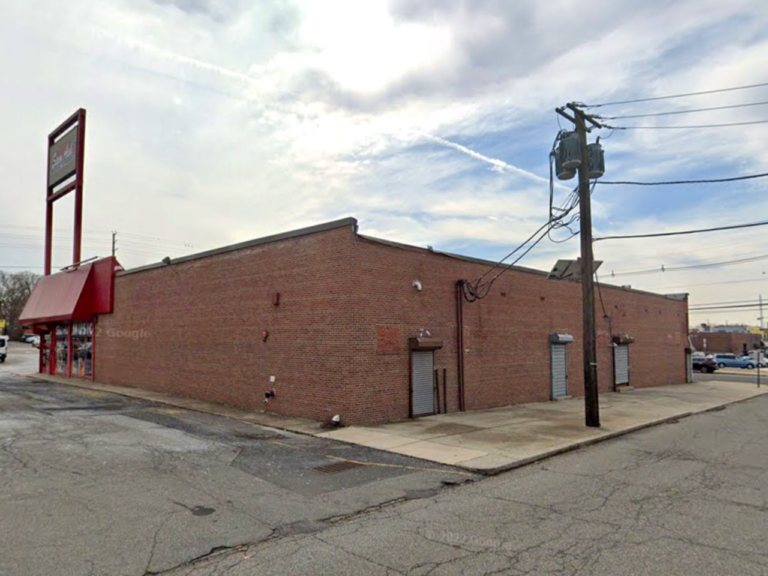
The vacant Route 27 property in Edison, where the Asian Fresh Market is expected to open, is pending final zoning board approval on October 14. (Google Maps)
October 6, 2025
Edison township officials backed plans for a new Asian grocery store on Route 27 during a recent zoning board meeting, but not before hearing several residents voice concerns that leaned on familiar stereotypes about the town’s growing Asian community.
The Asian Fresh Market is slated to move into the former Sam Ash building, which was purchased by new owners last year.
During the public comment portion of the meeting, one resident complained that the new store would create traffic problems because “Asians go grocery shopping every day.” Another speaker claimed that Asian drivers “don’t read turn signs.” Neither provided any evidence to support their claims.
Board officials quickly pushed back.
“I drive about 18,000 miles a year, and I walk three miles a day, and there are bad drivers of all races, religions, creeds, sex — no matter where you go,” said Board Chairman Michael Comba.
The residents also faced rebuttals from experts hired by the property owner.
“The witness here seems to have a peculiar knowledge of the shopping habits of the Asian community,” said planning engineer Mark Leber. “If you have that type of study, I would be interested in reading it, but I have never come across anything like that.”
Click below to view the exchange.
Their responses reflected a broader truth: stereotypes about Asian immigrants’ driving or shopping habits are not backed by data.
A major study by the Institute for Clinical Evaluative Sciences in Canada found that recent immigrants were about half as likely to be involved in serious car crashes as long-term residents. Researchers suggested that newcomers often drive more cautiously, travel shorter distances, and show greater attention to safety measures such as seatbelt use.
Closer to home, a Rutgers University study found that immigrants in New Jersey tend to drive less overall, relying more on carpools and public transportation. The researchers said that financial barriers and denser residential patterns best explain those differences, and not poor driving.
Other studies have reached similar conclusions. A New York City analysis found that immigrants are more vulnerable as pedestrians and cyclists mainly because of environmental factors such as unsafe crosswalks or unfamiliar street layouts and not because of recklessness.
Experts say such tensions are not unique to Edison. Sociologists who study “new immigrant destinations” — communities where large numbers of immigrants have settled relatively recently — note that rapid demographic change can bring both economic revitalization and moments of cultural friction. A University of Pennsylvania study on these communities found that new immigrant populations often experience “reactive nativism,” where unfamiliarity and rapid change lead to prejudice before long-term acceptance takes hold.
Over the past three decades, Edison has transformed from a mostly white suburb to one of the most diverse communities in New Jersey. According to U.S. Census data, Edison’s Asian population has grown from about one-quarter in 1990 to more than half today, while the share of white residents has steadily declined. The shift has brought new cultural life and economic activity. The redevelopment of Oak Tree Road has created one of the largest South Asian commercial districts on the East Coast. However, the changes have also stirred resentment and stereotyping.
Those tensions occasionally spill into public view. In 2019, an Indian American resident was reportedly told to “get on a plane and get out of America” following a township council meeting. The agenda focused on addressing ethnic tensions in the community after racist flyers surfaced around town targeting two Asian school board candidates ahead of local elections. US Postal Service investigators later suggested the flyers were created by associates of the targeted candidates as a way to capitalize politically on the local tensions by generating sympathy. The candidates denied involvement.
The exchange at the zoning board meeting last week was another reminder that Edison’s identity continues to evolve. What was once a township of diners, bowling alleys, and blue-collar factories now features bustling supermarkets, temples, and small businesses that reflect its multicultural population.
The zoning board is expected to take a final vote on the Asian Fresh Market proposal at its next meeting on October 14.