
Rahway Event Shines Light on Former Inmates’ Struggles and Second Chances
Documentary screening and panel at Rahway Public Library explore the barriers former inmates face and the fight to build fairer paths to reentry.
October 9, 2025
The Rahway Public Library hosted an event on Saturday aimed at raising awareness and support for former inmates and their struggles to reintegrate into society.
“Their stories do matter,” said Kashinda Marche, treasurer of the Rahway NAACP, in an interview. She organized the event alongside her daughter, Asia E. Marche, who co-wrote and produced the documentary A Race to the Reckoning. The film chronicles the lives of former inmates as they work to rebuild their lives after incarceration and will be screened during the event.
“I’m super proud of my daughter because she’s paying tribute to our ancestors,” Marche said.
The film explores a network of systems that former inmates must navigate in order to avoid winding up back behind bars. Organizers argue that those systems are often designed to keep people entangled in the justice system rather than to rehabilitate them.
Rahway Council Vice President Jeffrey Brooks served as the event’s keynote speaker.
“The premise of A Race to the Reckoning hits close to home for me,” Brooks said in an email. “Having family members who were once incarcerated, I know they weren’t bad people—just people who once made bad decisions. Once they’ve paid their debt to society, they deserve the opportunity to rebuild, provide for their families, and live with dignity. I’m grateful this film shines a light on how incarceration impacts not only individuals but entire families, and I look forward to the important discussion it sparks.”
Following the screening, a panel discussion featured Karla Alvarez, a member of the Rahway Social Justice Commission, and T.J. Whitaker, an activist and educator at Columbia High School in Maplewood.
The Broader Issue
Former inmates face significant challenges when returning to society. Stigma toward ex-offenders makes it difficult to find a job, often a requirement for parole. Limited access to mental health care can also increase the risk of rearrest and reincarceration.
Adding to those challenges are powerful financial incentives that keep the prison system entrenched. The Brennan Center for Justice found the nation’s two largest private prison corporations made nearly $1.2 billion in combined revenue in just the second quarter of this year. Meanwhile, a report by the Prison Policy Initiative estimates that billions more are generated annually by bail bond, health care, and commissary companies tied to the American justice system.
Advocates argue these incentives create a “revolving door” that funnels people back into prison. The Prison Policy Initiative also reports that nearly two million people are incarcerated in the United States, roughly a quarter for non-violent offenses ranging from drug possession and immigration violations to missing a court date for a minor infraction.
While reincarceration rates have improved under bail reform, which is under increasing political scrutiny, about two out of three ex-offenders are rearrested within three years of release, according to a study by the City University of New York.
New Jersey’s Reality
New Jersey’s bail reform efforts have reduced the number of former inmates sent back to prison, according to state court data. However, nearly half of those released are rearrested within three years, and one in four inmates statewide are considered low-level offenders, according to the New Jersey Department of Corrections.
Racial disparities remain stark. Nearly two-thirds of the state’s prison population is Black, almost twice the national average.
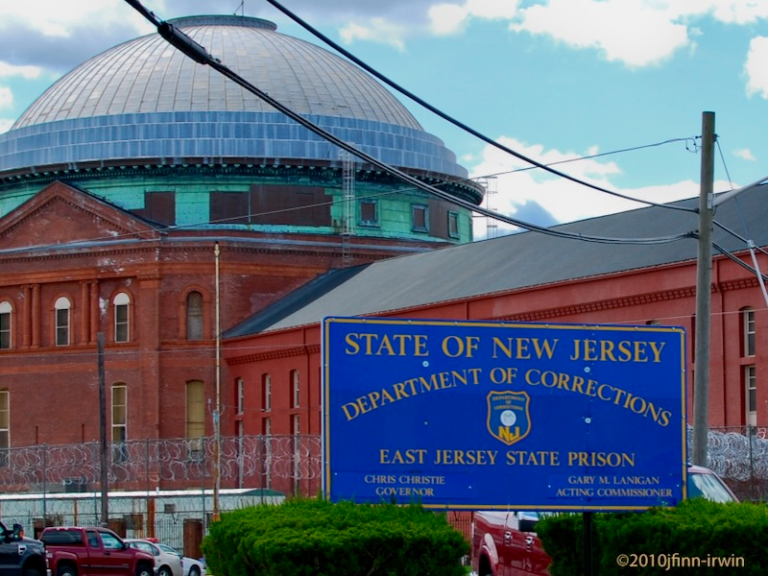
Rahway is a fitting location for the event, as it is home to East Jersey State Prison, which houses more than 1,000 inmates. The Marches chose to bring their recidivism awareness tour here after holding similar events in Hillside and Irvington.
A Push for Change
Marche’s organization, Kreative on Purpose, focuses on self-esteem and mental health. She hopes raising awareness about the challenges facing former inmates will lead to more resources and a more compassionate society.
She praised Rahway for celebrating its diversity but urged greater visibility for a group she says often remains overlooked.
“We want the city to witness the community coming together about this issue,” Marche said. “Not all ex-offenders are violent or dangerous—some were simply trying to provide for their families and got caught up in a broken system.”
***Editor’s Note: This story has been updated.