
Woodbridge Opens Its Streets to Fiber Internet
For decades, cable companies controlled how the internet was delivered across Central Jersey. A new ordinance passed this month in Woodbridge removes that barrier, and the timing is no accident. A regional fiber buildout is already underway.
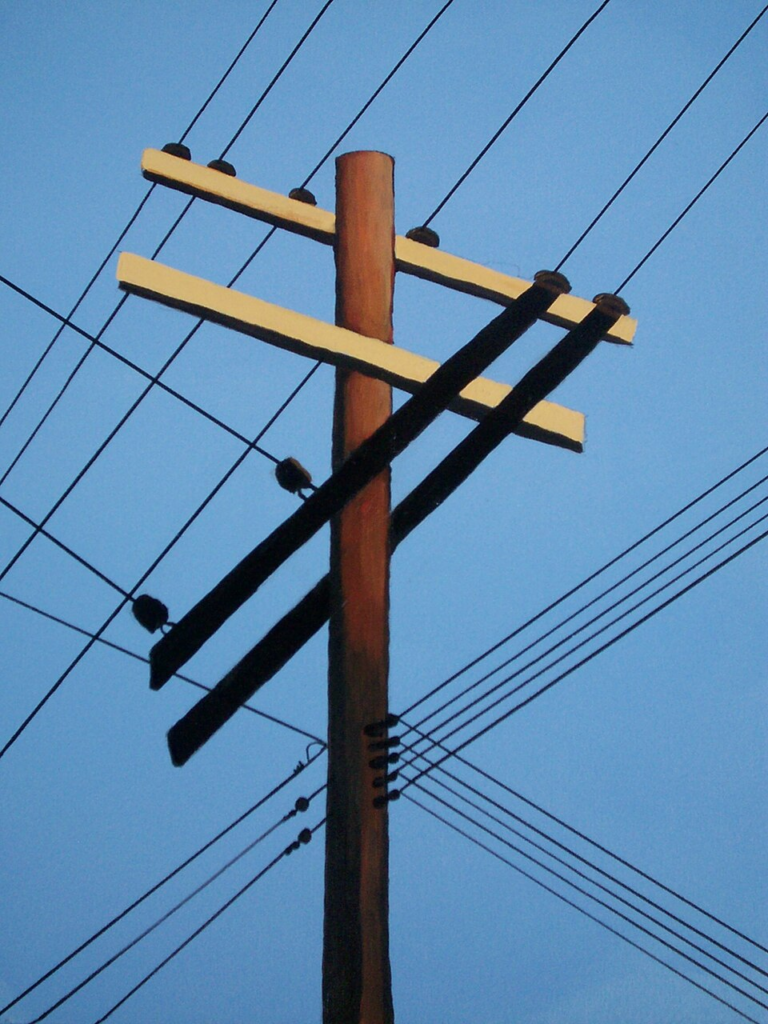
(Illustration by Elizabeth Virginia Perry)
Editor’s note: The Central Jerseyan is free to read and supported by advertising. If you value this kind of local reporting and want to help sustain it, you can become a citizen supporter on Patreon. Your contribution helps fund continued coverage of local government, schools, and community issues.
Chris Howell | May 27, 2026
The Township of Woodbridge quietly adopted an ordinance this month that will reshape how the internet is delivered to homes, and at least one company is already ready to build.
On May 19, the Municipal Council gave final approval to new rules governing how fiber and wireless providers can deploy infrastructure on public land. The ordinance creates a streamlined permitting system that is explicitly non-exclusive. Any qualified provider can apply, and no single company can lock out others.
The change sounds technical. But it lands in the middle of a fast-moving regional shift in how broadband competition works, and the company that appears in the agreement attached to the ordinance is already breaking ground nearby.
DON’T LET AN ALGORITHM DECIDE YOUR NEWS
Sign up for The Central Jerseyan Newsletter for independent hyperlocal news and events every Sunday.
GoNetspeed isn’t new to this region. Last year, the company announced a privately-funded $110 million expansion into New Jersey, targeting six initial communities, including Carteret, Old Bridge, Parlin, and South River. This spring, the company announced plans to begin construction in South River this summer, about 10 miles from Woodbridge, with the first customers expected to be connected by fall 2026.
GoNetspeed has already set its sights on Woodbridge. The company’s website includes a dedicated Woodbridge page where residents can enter their address to check availability, with four service tiers ranging from 500 Mbps to 6 Gig. The page states service is “now available” at some addresses, though the company’s FAQ notes that coverage does not yet extend to all parts of the township.
The ordinance passed May 19 gives GoNetspeed and any other provider the legal framework to expand that footprint. The right-of-way agreement grants a licensee a 15-year term with options to renew for up to four successive five-year periods.
For decades, telecom infrastructure in New Jersey municipalities operated under a franchise system. A township granted one company exclusive rights to use public streets and utility poles in exchange for a percentage of revenue and service commitments. Typically, that company was Comcast or Optimum.
The old model gave cable operators enormous leverage. They controlled the poles. They controlled the conduits. Competing providers had to negotiate separately or litigate for access. The results were visible on cable bills.
The new ordinance replaces that with a $500 application fee for up to five facilities and a $270 annual maintenance rate per facility. Any provider pays the same. Furthermore, New poles and structures must be designed to accommodate multiple carriers simultaneously. If GoNetspeed builds a pole, Verizon and T-Mobile must be able to attach their equipment to it. No provider can build infrastructure and then lock out competitors.
The regional timing is striking. In December 2025, Optimum announced a $40 million expansion of its fiber network into Woodbridge, Clark, and Linden. The company said service would also extend to Rahway and Roselle, with Carteret and Perth Amboy slated for fiber deployment by spring 2026.
Woodbridge didn’t open the streets entirely. The township maintains meaningful controls.
Providers can’t put equipment just anywhere. The township’s Wireless Siting Plan designates approved locations, and facilities must be placed within 25 feet of those spots. New poles must match the character of the surrounding infrastructure. That means using wood poles in neighborhoods with wood poles and underground utilities where they already run underground. Small wireless facilities must also be at least 500 feet apart, preventing a chaotic proliferation of equipment on every block.
Whether the added competition translates into lower bills, faster speeds, or better customer service depends on who shows up and where they build. But the structural barrier that kept competitors out for decades has come down.
Editor’s note: The Central Jerseyan is free to read and supported by advertising. If you value this kind of local reporting and want to help sustain it, you can become a citizen supporter on Patreon. Your contribution helps fund continued coverage of local government, schools, and community issues.