
Edison High School Students Reflect on Organizing Anti-ICE Protest
A week after about 100 Edison High School students marched to the municipal building, two participants describe how the anti-ICE protest came together, the backlash that followed, and why they say they’re not finished.

Keia Smith (left) and Taziyah Lanier (right) say they would participate in another protest despite backlash following the march. (The Central Jerseyan)
Chris Howell | February 13, 2026
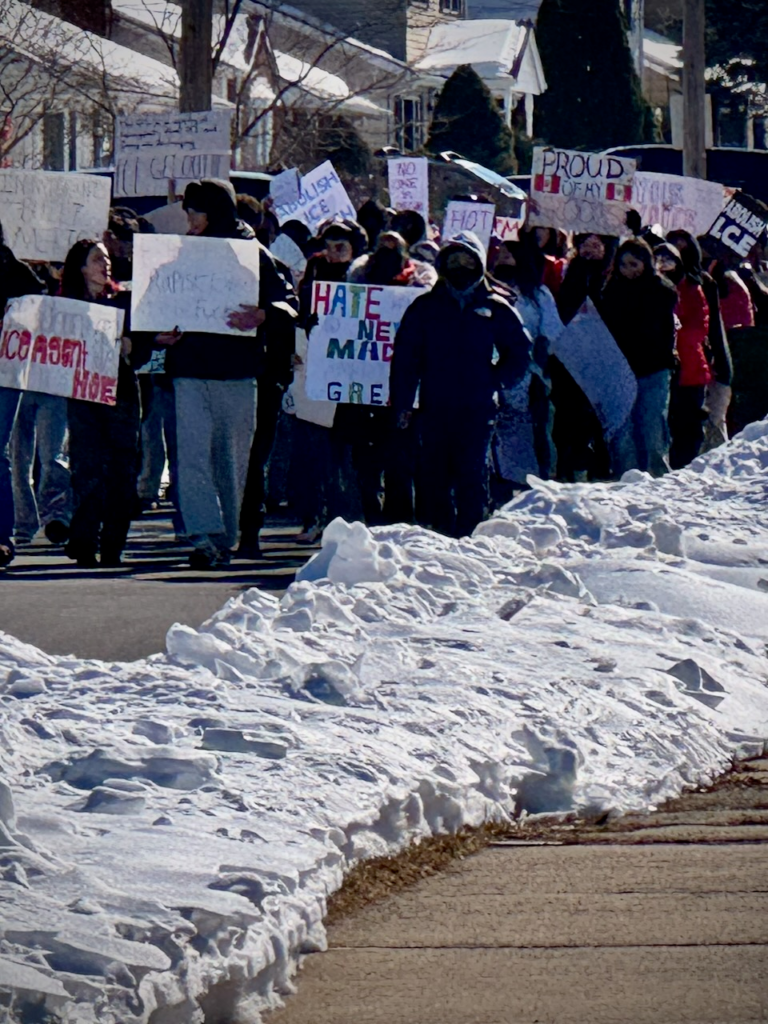
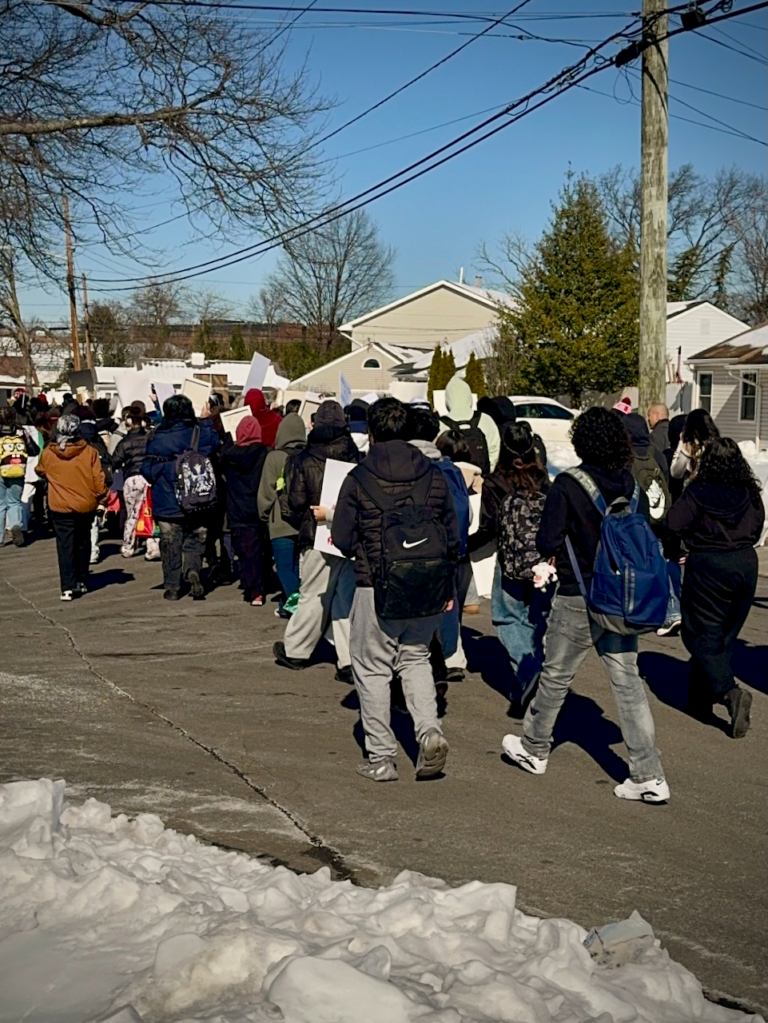
A week after roughly 100 Edison High School students marched through township streets in an anti-ICE protest, two of the students who helped organize the demonstration say the experience changed them.
When Keia Smith returned to school the day after the protest, she felt different.
“I’m fake famous in the hallways,” she said, laughing. Classmates were stopping her to say they had seen the video. Some were supportive. Others weren’t.
For Smith and fellow student Taziyah Lanier, the anti-ICE protest itself was only part of the story. The days before and after the march were just as intense.
According to the two students, the protest began not with a meeting, but with a social media follow.
An Instagram account dedicated to organizing an Edison protest began following students. Smith, who has more than 2,000 followers, followed back and was soon asked to help spread the word. She posted about it, and interest grew quickly.
“I put it in my notes. ‘If you want to make a difference, follow this account,'” she said. “Instantly, I had a bunch of followers interacting with it.”
DON’T LET AN ALGORITHM DECIDE YOUR NEWS
Sign up for The Central Jerseyan Newsletter for independent hyperlocal news and events every Sunday.
Lanier described a similar path. She reposted the account’s message to her story and soon found herself added to a group chat of students discussing logistics. Within days, a date was set.
The organizer of the protest chose to remain anonymous, a decision Smith said was about safety. “It’s easy to gang up on somebody when you know they’re supporting a cause like this,” she said.
Rumors circulated in the group chat — including one that someone might call ICE to the protest. There were also questions about trust and legitimacy. But momentum continued to build.
“Nobody was really taking the lead,” Smith said. “So I might as well do it.”
Online, support appeared strong. Students commented that they would attend and shared posts encouraging participation. But inside the school building, the mood felt different.
“When I got to school and started asking people if they were coming, a lot of people were like, ‘No, I’m not doing that,’” Smith said.
The disconnect left her uncertain how many would actually show up. “I wasn’t sure what the turnout would be,” she said.
When students began assembling and the crowd grew, both described an emotional shift.
“I wanted to cry,” Smith said.
Lanier agreed. “It was very emotional. I feel like it was impactful.”
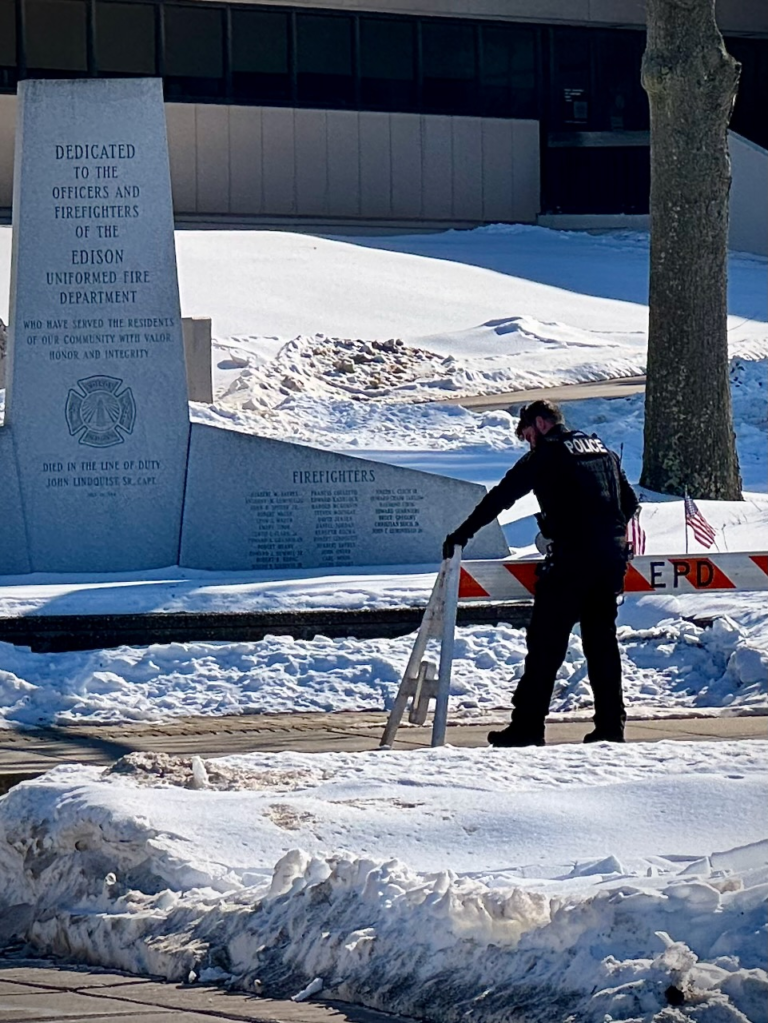
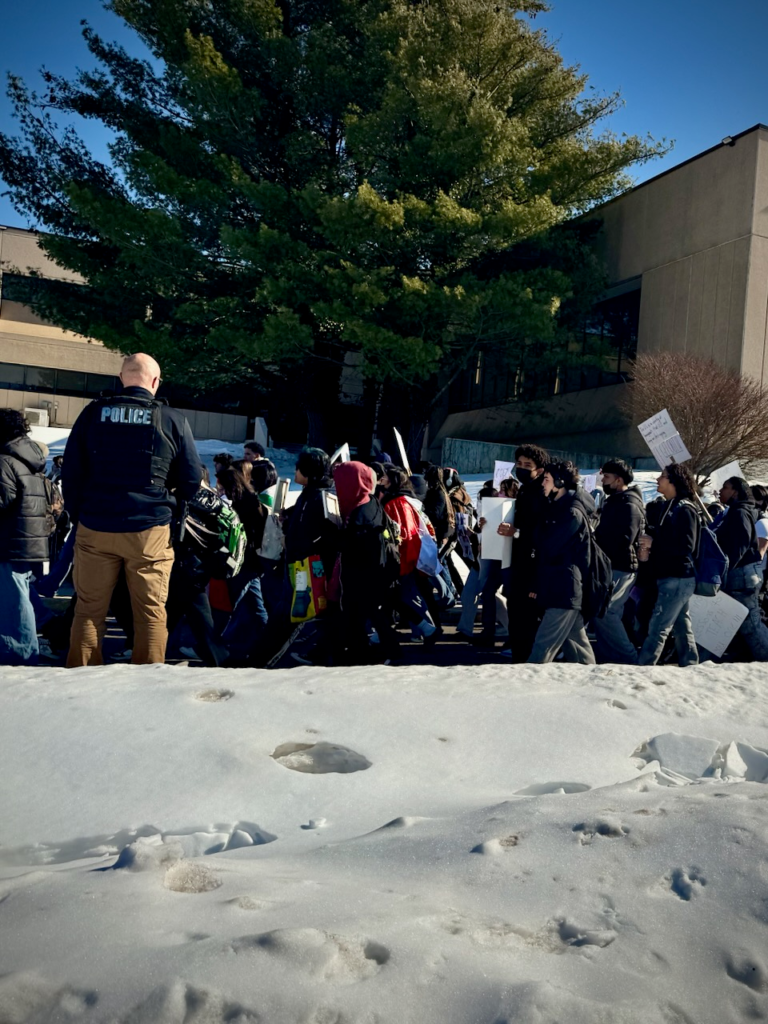
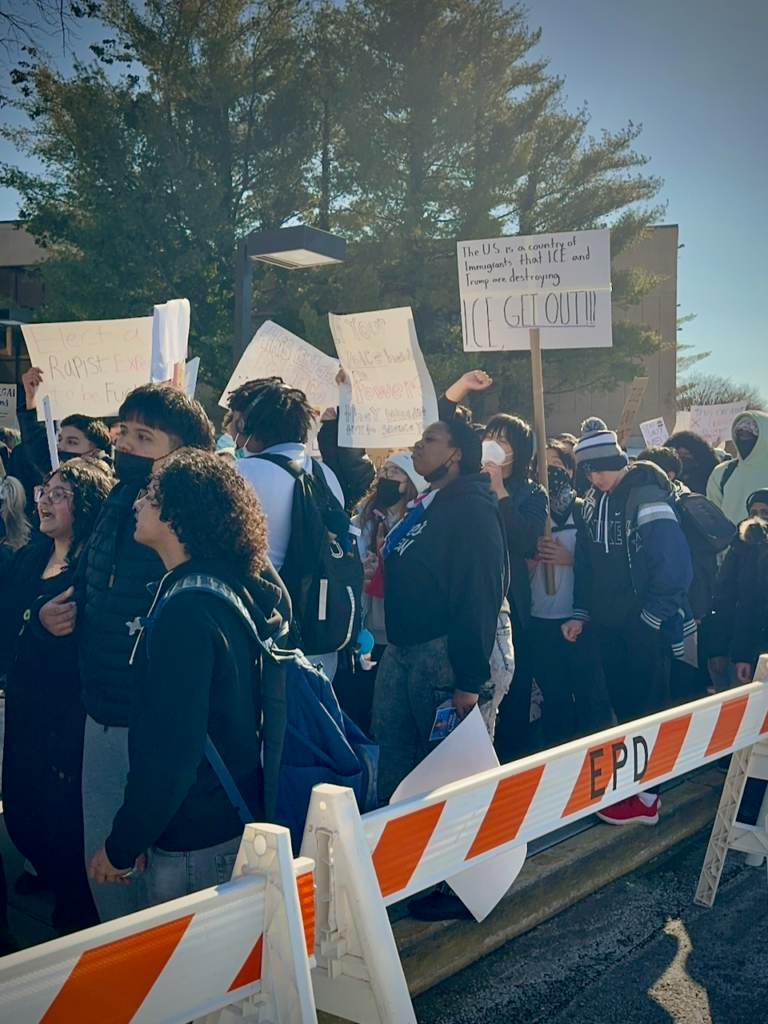
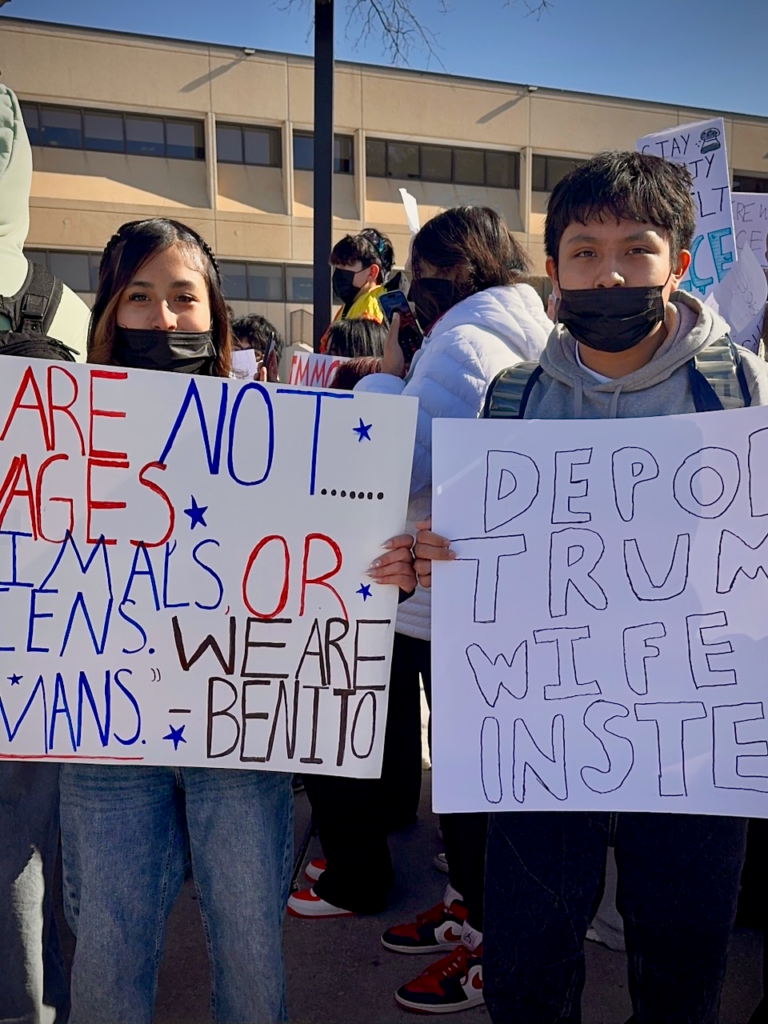
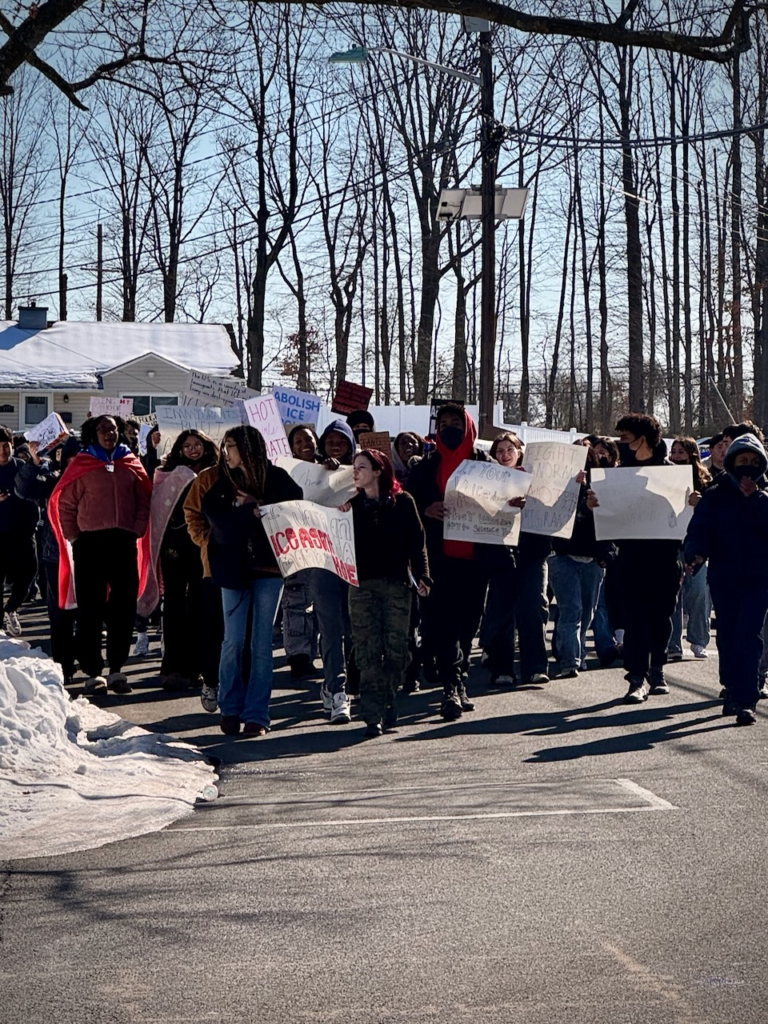
Edison High School students marched from the school to the municipal complex, where they held a brief rally before marching back to the school. (The Central Jerseyan)
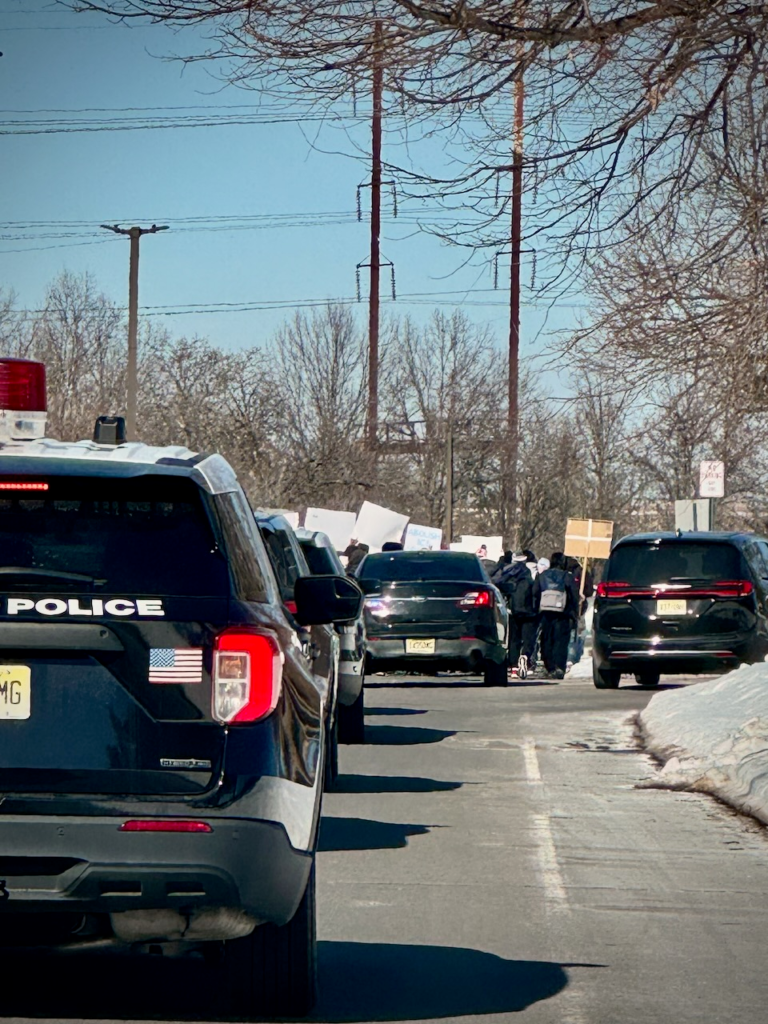
The protest remained orderly throughout, with police escorting students and directing traffic. Still, there were moments of tension.
Near the end, a few boys began throwing snow at each other. Smith said she stepped in to ask them to stop.
“We don’t want them to get the wrong idea,” she recalled telling them.
For the organizers and speakers, maintaining a peaceful tone was critical. Lanier said she wasn’t nervous during the protest itself because students felt unified. “If something happened to one of us, it happened to all of us,” she said.
The shift came after students dispersed.
“Literally moments after we left, people were rushing to me,” Smith said. A fellow student had posted that the protesters were “pathetic.”
What frustrated her most was how quickly attention moved away from the turnout and toward that one negative comment.
“That’s what everybody was focused on,” she said.
The criticism extended beyond classmates. After video of the march circulated widely online, adults weighed in on social media. Some questioned whether teachers had allowed students to walk out. Others suggested the protest was an excuse to skip class.
Students pointed out that the march occurred after a scheduled half day.
“It was frustrating,” Lanier said. “A lot of people were speaking on things they don’t even know about.”
Smith said seeing adults attack teenagers online was particularly upsetting. “These are children,” she said.
Neither student said their own immediate family members had been directly affected by immigration enforcement. But both described being motivated by what they see happening around them.
Smith said a friend’s father was recently detained, and watching that situation unfold made the issue feel personal.
“I want things to stop because he should be able to come to school and live a life,” she said.
Lanier said she believes solidarity matters, even when an issue does not directly impact someone’s own household.
“The world is not going to become a better place if we’re just focused on if it’s happening to us,” she said.
Both referenced historical efforts like the Civil Rights and Black Live Matter movements as evidence that demonstrations can create change.
Their parents, they said, were supportive but cautious.
Lanier said her mother encouraged her participation but worried about escalation.
“I showed her to comment from the girl,” Lanier said, referring to the “pathetic” social post. “And she was just like, ‘People are gonna say what they want to say, but it’s about how y’all handle it.’ So I just been trying to stick to that.”
Smith told her mother shortly before the protest began.
“Be safe,” she recalled her saying. “Don’t be getting arrested. I don’t go no bail money.”
Several parents were present nearby in vehicles during the march, monitoring the situation from a distance.
“My mom pulled up to the protest,” Lanier said, amused as she reflected on the moment. “I told her to go home.”
With some time to reflect, neither student expressed regret.
“I’d do it again,” Lanier said.
Smith agreed and suggested it could be bigger next time.
Both acknowledged that protests invite criticism. But they said they believe speaking out matters, even when it draws heat.
“We need to use our voice,” Smith said.
For now, the hallways have quieted. The viral moment has passed. But for the students who helped organize the march, the experience appears to have solidified something rather than ended it.
They say they’re watching. And they’re willing to march again.
Editor’s note: The Central Jerseyan is free to read and supported by advertising. If you value this kind of local reporting and want to help sustain it, you can become a citizen supporter on Patreon. Your contribution helps fund continued coverage of local government, schools, and community issues.